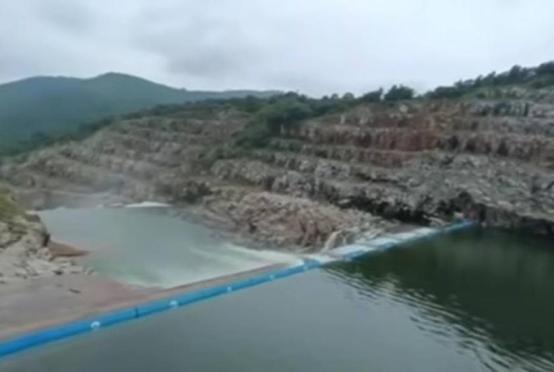


The Bago River in Bago, Bago Region, rose above the danger level on the morning of July 30, sending floodwaters into roads in several low-lying neighborhoods.
According to the Department of Meteorology and Hydrology (DMH), the river measured 881 centimeters at 7:30 am on July 30, 1 centimeter above the danger level of 880 centimeters. The department forecast that the river could rise by another one foot over the next day and remain above the danger level. Residents living along the riverbanks and in low-lying areas of Bago Township have been advised to remain alert and take necessary precautions.
Continuous rainfall since July 28 caused the river to rise rapidly. By the morning of July 29, floodwaters had inundated low-lying areas and depressions across Bago, including Zai Taung Ward, Myothit Ward, Kwat Thit Road, Natsin Pine Road, and Padamyar Road, where water depths exceeded four feet in some locations. Authorities implemented flood prevention and response measures.
By the evening of July 29, floodwaters had also spread onto roads between Yekyaw Pine, Ohlaysu, and Pyidawthar in Mazin Ward. Although the situation had not yet reached a critical level, local officials said they were closely monitoring river conditions and would continue issuing updates if significant changes occurred.
On the morning of July 30, after the river surpassed the danger level, approximately 500 houses in Kalyani Ward areas (1), (4), (5), (6), and (16) were inundated, with water reaching depths of up to four feet. Officials urged residents to prioritize their safety and closely follow instructions and announcements from the relevant authorities as conditions could continue to change.
Meanwhile, the Sittaung River in Madauk, Bago Region, reached 1,067 centimeters as of 6:30 am on July 30, just 3 centimeters (about one inch) below the town's danger level of 1,070 centimeters, according to the DMH. The department warned residents living in low-lying areas near the river to remain vigilant and be prepared to evacuate promptly if water levels continue to rise.