
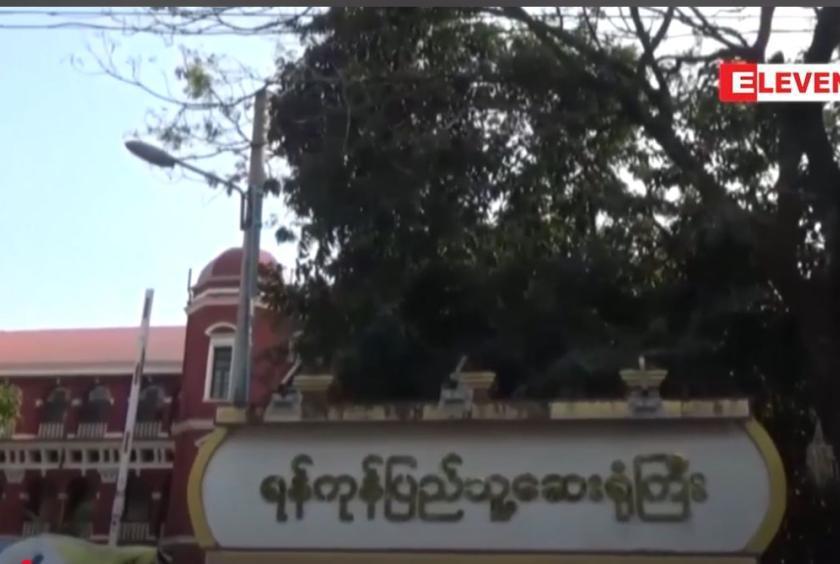
Yangon General Hospital (YGH) has successfully completed a complex palm replantation surgery on a 27-year-old male patient from Hpa-an, who suffered a complete amputation of his left palm due to a knife injury on May 24 at around 11 am.
The patient initially received emergency treatment at Hpa-an General Hospital before being transferred to YGH for advanced care. After undergoing diagnostic evaluations in the Emergency Department, the surgical team began the replantation procedure at 10:30 p.m. on May 24. The surgery concluded successfully at 5:30 a.m. the following day.
Following the operation, the patient remained in stable condition, and blood circulation to the reattached palm was reported as satisfactory. He was discharged from the hospital on June 11 and returned for a follow-up consultation on June 16, during which his recovery was confirmed to be progressing well.
The surgical team included Dr. Ye Naing Oo and Dr. Aung Hlaing Phone, both second-year orthopedic hand surgery doctoral trainees; Dr. Khaing May Oo, a third-year doctoral trainee; Assistant Orthopedic Surgeon Dr. Yaza Aung Saw Win; and second-year postgraduate trainee Dr. Sai Thiha. The procedure was conducted under the supervision of anesthetist Dr. Delia Soe Win and a team of anesthesia specialists. Nursing care was led by Sister Daw Moh Moh Aung, with additional support from laboratory technicians, radiographers, and other departments.
This marks the fourth successful replantation surgery carried out by Yangon General Hospital in recent years—one palm in 2022, a forearm in 2023, a thumb in 2024, and now another palm in 2025.
Medical experts advise that in cases requiring replantation, the severed limb should be rinsed with clean water or sterile solutions like normal saline or Ringer Lactate, wrapped in sterile gauze soaked in the same solution, then placed inside a clean plastic bag or container. This should be sealed and stored in an ice-filled cooler to preserve viability until surgery.