
In the upper part of Shweku town, Kachin state, local villagers reported discovering numerous gold veins in the farmland and near villages.
These gold veins are situated on the hills above the sacred Kyun Taw Pagoda, and currently, gold mining activities are taking place in the nearby farmlands.
According to a driver from Shweku town, “The mining has reached all the way to the northern region. It spans across Bhamo, Shweku, and surrounding villages. The mining sites along the riverbanks are active, including farmlands and even household areas, where the land is being bought and sold for hundreds of thousands of kyats. The villages upstream are also affected, and we might see the riverbanks collapsing soon. They’ve started mining gold veins and shifting riverbeds, which are completely different from the previous methods. It used to be smaller-scale, but now they are working with a 16-inch inlet and outlet.”
It is also reported by those involved in gold mining that local armed groups, including KIA and PDF, are mainly seeking taxes from these activities.
One miner mentioned, “Tax value ranges from 20 million kyats to 2 viss of gold. The initial investment is over a million kyats. They (miners) don’t much care for civilians if they have good relationships with the armed groups. Even Facebook posts are rare now. Those who’ve been through it before are keeping quiet. If they make a profit in a month, it’s significant.”
A gold miner from 2022 recalled that in order to gain permission to mine, the machine fees were dependent on the type of dredger used. For example, a 12-inch dredger would cost around 12 million kyats monthly, 10-inch dredgers would cost 10 million kyats, and 8-inch dredgers would cost 8 million kyats. The miners were required to make upfront payments and share profits with armed groups and local officials.
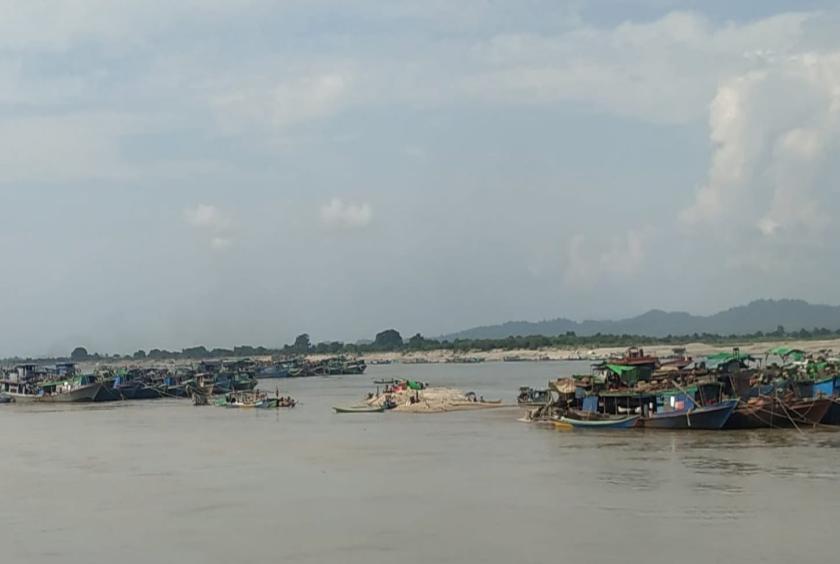
In early 2021, illegal gold mining activities along the Ayeyarwady River became widespread, especially between Myitkyina and Sinbo towns, with hundreds of gold dredgers flooding the area. During the same period, old speedboats, which previously served as transport, were converted into mining dredgers due to unemployment. In fact, almost all speedboats in Bhamo were repurposed for gold mining.
Currently, illegal mining continues throughout the Ayeyarwady River basin, including the Mekha and Malika rivers, with severe environmental damage. The riverbeds have been altered, and species of fish dependent on the ecosystem are now at risk. An environmental group expressed concerns, stating, “We’re worried about the riverbed changes and the impact on aquatic life. For the last three years, the water has been murky and unclear. Mining activities have spread across the region, and the armed groups are focusing only on their needs, leaving the environment in peril.”
As a result of these mining activities, significant land erosion and the loss of arable land have occurred, leading to reports being filed with the regional legislature during U Thein Sein’s administration.